Definition and working principle
Thermal insulation reduces heat transfer through roofs, walls and exposed building components. In hot climates, this means lower indoor temperatures, reduced air-conditioning load and more stable comfort throughout the day.
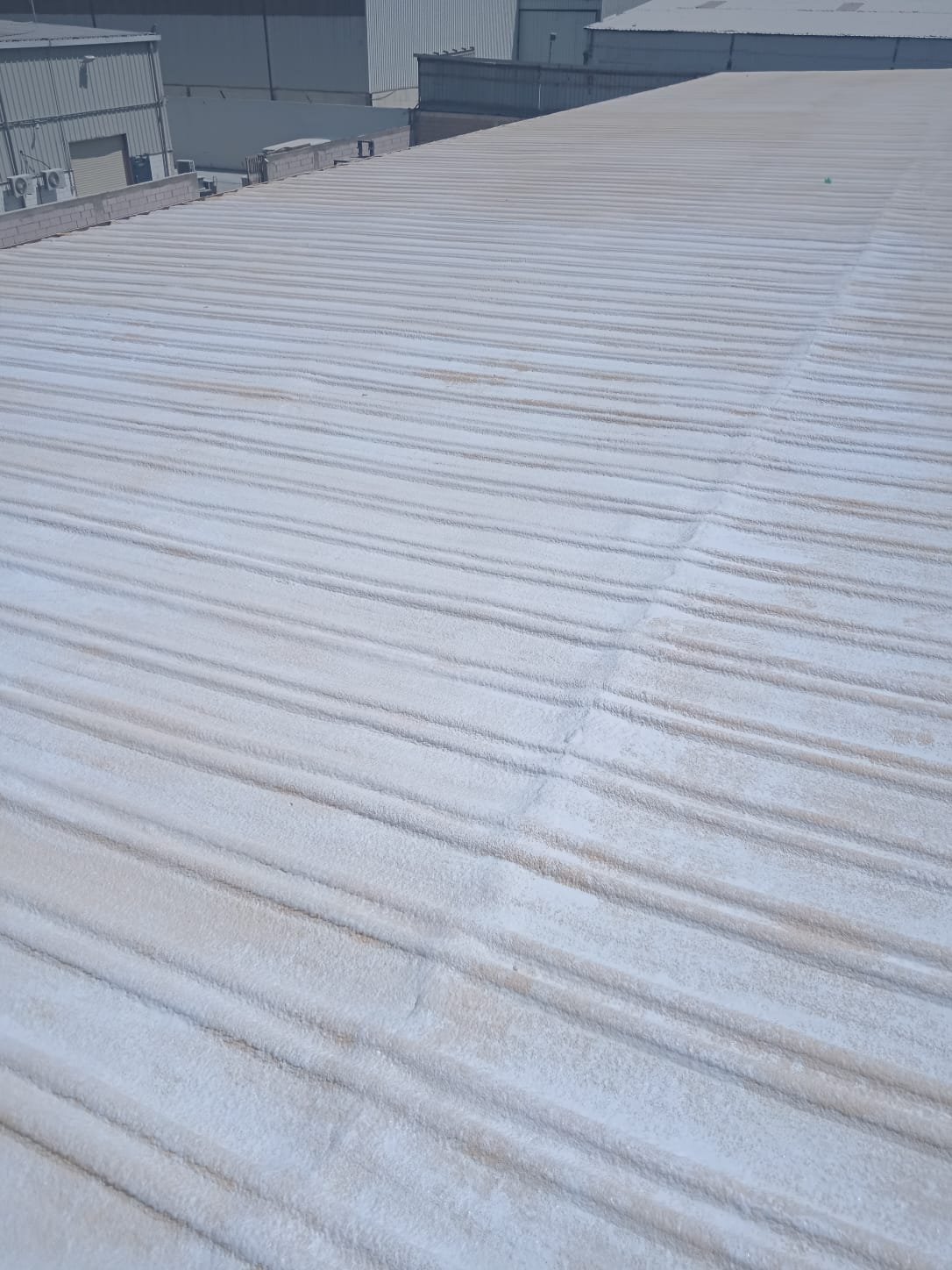
When is thermal insulation necessary?
- When upper floors overheat during summer afternoons.
- When electricity bills rise sharply due to heavy cooling demand.
- When metal or exposed roofs gain heat quickly.
- When a new project aims for better long-term energy performance.
Available thermal insulation systems
- Polyurethane foam: a fast and highly effective roof solution that combines insulation with a protective roof system.
- Boards and panels: used in selected wall, roof and sandwich panel applications.
- Combined systems: thermal and waterproofing protection together for exposed roofs.
Real economic value
Thermal insulation does not only improve comfort. In many projects it lowers the cooling load significantly, extends HVAC efficiency and helps stabilize indoor temperatures. The exact savings depend on roof area, building use, existing condition and system selection.
Can thermal and waterproofing be combined?
Yes. In many roof applications, the best result comes from a system that provides thermal performance plus waterproof protection, especially in exposed roofs that face both solar load and rainfall.
Frequently asked questions
- Is foam always the best choice? It is often excellent for large roofs, but the right answer depends on substrate type and project condition.
- Does thermal insulation matter only in summer? No. It improves overall envelope stability and HVAC efficiency year-round.
- Can old roofs be upgraded? Yes, after inspection and proper preparation.
Summary
Thermal insulation is one of the most practical long-term improvements for exposed roofs in hot climates. The right system improves comfort, lowers cooling demand and protects the roof from premature deterioration.